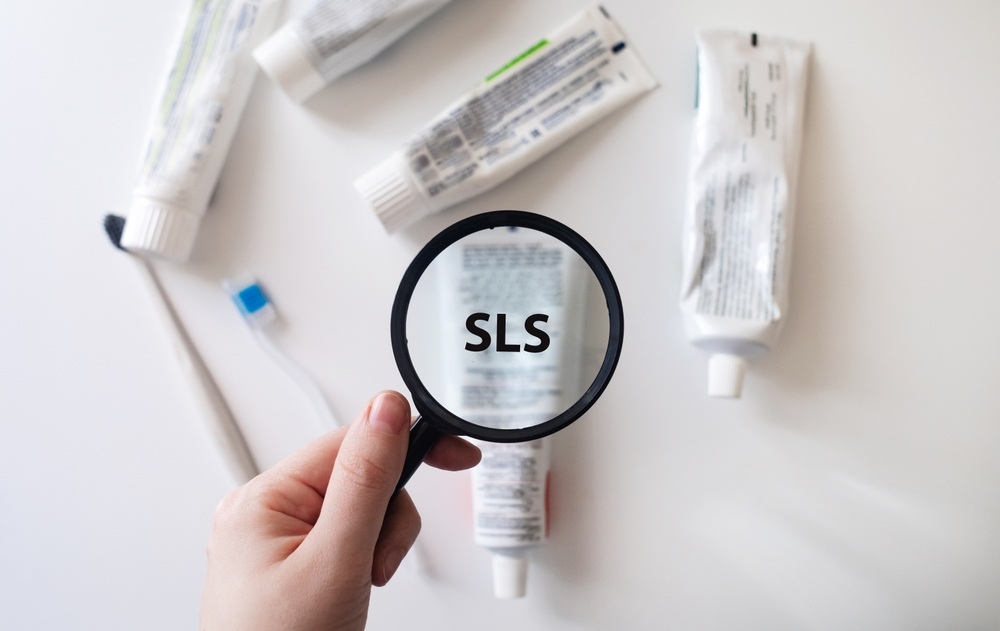
TL;DR:
SLS-free toothpaste is a gentler alternative to traditional sodium lauryl sulfate toothpaste, designed to clean effectively without the irritation some people experience from foaming agents. While SLS isn’t inherently harmful to humans, it can contribute to sensitivity, dry mouth, and oral irritation in certain individuals. Plus, its production is often harmful to the environment.
Here’s what you’ll learn:
- What SLS-free toothpaste is and how it differs from regular toothpaste
- Whether SLS is bad for teeth and who should avoid it
- Why SLS-free formulas may be better for sensitive teeth and dry mouth
- Why SLS free formulas may be better for the environment
- How SLS can affect the oral microbiome and fluoride performance
- What to look for in the best SLS-free toothpaste for dry mouths and overall oral health
You’ve probably seen labels on toothpaste tubes at your local drug store or supermarket dental aisle that say “SLS free toothpaste”. But what do these beguiling three letters stand for, and why does it matter?
SLS stands for Sodium Lauryl Sulfate, which is a type of surfactant. (Surfactants create foam). Because of this, SLS is commonly found not only in toothpaste but also shampoos, soaps, and household cleaning agents.
The problem? SLS is not universally tolerable. What’s more, the Environmental Working Group (EWG) gives SLS a “C” hazard rating meaning it carries a moderate level of concern depending on formulation and exposure. It also is often produced in ways that are not environmentally friendly, making other options potentially greener as well as healthier.
Does Foam Actually Matter in Toothpaste?
More foam = better cleaning, right? Actually, no. The foam you see when using toothpaste certainly makes you feel like you’re getting your mouth cleaner. But in reality, foam is just a sensory experience. It doesn’t remove plaque. It can even make it harder to see where you’ve brushed versus missed, potentially reducing the efficacy of toothbrushing.
What’s more, for some individuals, the ingredient that causes that foam, SLS, can cause irritation or worsen dry mouth. What matters much more than foam is:
- Brushing technique
- Time spent brushing
- The active ingredients in your toothpaste
When SLS Becomes a Problem
Sodium lauryl sulfate (SLS) can create issues for certain folks, including people experiencing the following issues:
- Sensitive Teeth or Gums: If you’ve been told you have sensitive teeth or gums, or you simply notice that your teeth or gums tend to sting when brushing or when exposed to extreme temperatures, chances are SLS may be contributing to soft tissue irritation, increased sensitivity, or reduced comfort during brushing.
- Dry Mouth: Saliva does much more than simply provide lubrication in your mouth. It also acts as a silent guardian of sorts for your mouth, delivering key nutrients, providing antibodies for immunity, and depositing minerals into tooth enamel. And SLS can create a drying effect, especially in individuals with already-dry mouths.
- Canker Sores: Some clinical research studies suggest a link between SLS and recurrent canker sores.
- Oral Microbiome Disruption: Your mouth is home to a complex community of bacteria that help maintain balance. Because SLS has detergent-like properties, it may disrupt beneficial bacteria and alter the oral environment. Over time, that imbalance can contribute to irritation and discomfort.

Does SLS Affect the Efficacy of Toothpaste?
SLS is added to toothpaste because it creates a brushing experience that most people recognize and associate with cleanliness. But is that foam doing more harm than good? Potentially, yes. That can be the case for a number of reasons.
The first and most obvious is by hiding which sections you might not have brushed thoroughly, which has been brought up already. But SLS may also interfere with how ingredients that help restore enamel/prevent cavities like fluoride and hydroxyapatite interact with enamel, which can impact how effectively they support remineralization.
In other words, SLS may decrease the anticavity properties of anticavity toothpastes.
A Note on the Environmental Impact of SLS
Our oral care choices aren’t always just about personal health. They’re also often about environmental impact. SLS is commonly derived from petroleum as well as palm oil (which has been linked to deforestation concerns). What’s more, environmental data compiled by the EWG shows that sodium lauryl sulfate can have acute and chronic toxicity to aquatic life at certain concentrations. In other words, choosing an SLS free toothpaste may be more environmentally friendly.
So, Is SLS Free Toothpaste Better?
Yes, for many patients, removing SLS can lead to a more comfortable brushing experience, especially if they struggle with sensitivity, dryness, or irritation. But for others, SLS may not cause noticeable issues.
What’s important to understand, however, is that SLS is not essential for oral health. It doesn’t prevent cavities or strengthen enamel. It simply creates foam.
So if you’re experiencing any of the issues discussed above, switching to an SLS-free toothpaste is a simple, low-risk change that may improve your overall oral comfort. What’s more, if you’re concerned about making green purchasing decisions, switching to an SLS free toothpaste may also be preferable.
How to Choose the Best Toothpaste for Your Needs
Not sure what to look for in your toothpaste if you’re considering making the switch to SLS free toothpaste for sensitive teeth, dry mouth, or improved comfort? Read my blog post on what to look for in an all natural toothpaste for additional information and guidance.
Looking for a quick, dentist-approved, science-backed solution? Shop SuperMouth mouthpaste now.