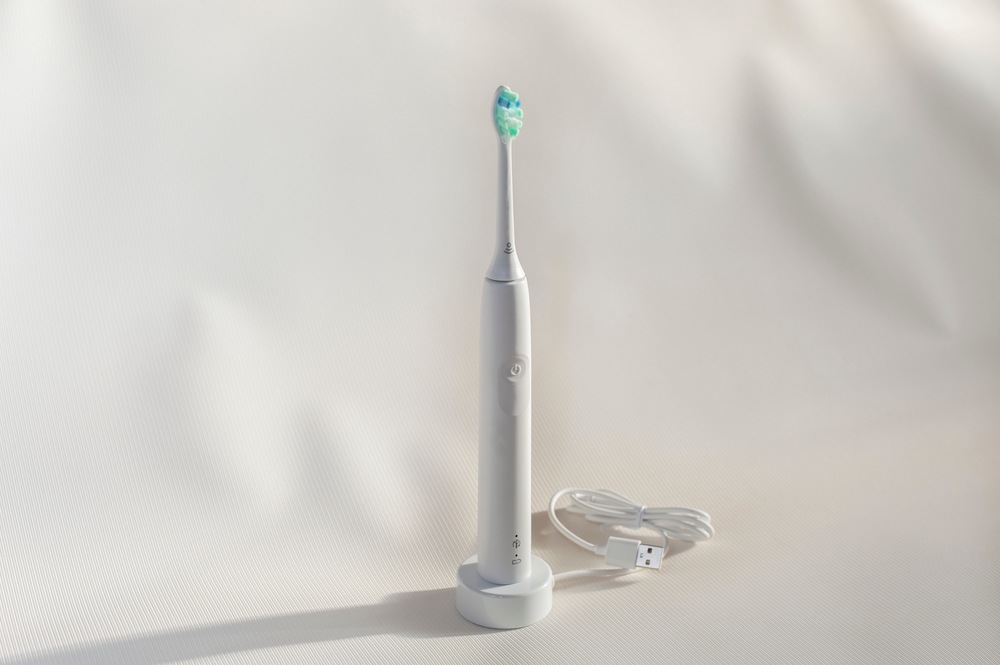
Blog Summary: A sonic toothbrush type of electric toothbrush that uses high-speed vibrations to help remove plaque more effectively than manual brushing for many people.
In this blog, you’ll learn how sonic toothbrushes work, why their cleaning action is different from manual brushing, and what features matter most when choosing one.
Highlights include:
- Sonic toothbrushes use rapid vibrations to disrupt plaque and support gumline cleaning.
- Many models produce tens of thousands of strokes per minute.
- Sonic technology may help clean beyond direct bristle contact through fluid movement.
- Research suggests sonic brushing can help maintain lower plaque scores than manual brushing.
- Smart features like timers, pressure sensors, and sanitization systems may improve daily brushing habits.
Brushing your teeth is an activity that’s second nature to many of us adults. But for kids and adults with reduced dexterity, a sonic toothbrush can be a real lifesaver.
What about everyone else, though? Are sonic toothbrushes and electric toothbrushes more effective than manual brushes, generally speaking? Do they offer enhanced capabilities or features that make them worth the cost?
In most cases, yes. To be clear, when used correctly, manual brushes can certainly provide more than adequate performance. But due to the way they work, sonic toothbrushes offer more consistent performance for a wider array of individuals. What’s more, sonic toothbrushes are commonly also “smart toothbrushes” that come packed with additional features that increase brushing efficacy and ease even more.
But before getting ahead of ourselves, let’s directly answer the questions “What is a sonic toothbrush?” and “How does a sonic toothbrush work to remove plaque?”.
What is a Sonic Toothbrush?
A sonic toothbrush is a type of electric or powered toothbrush that uses a motor to create high-frequency vibrations in the brush head.
Most sonic toothbrushes pulsate at a rate of somewhere between 24,000-62,000 strokes per minute.
For comparison’s sake, when brushing with a manual toothbrush, you can normally achieve anywhere from around 200-300 strokes per minute. That’s roughly a 12,000-21,000% difference!
Why does this speed matter? Because it breaks up plaque and sweeps away debris.
In other words, a sonic technology toothbrush adds speed and consistency that manual brushing cannot fully replicate. This can be especially helpful for children who are still developing the fine motor skills needed for thorough brushing.
How Does a Sonic Toothbrush Work to Remove Plaque?
A sonic toothbrush uses a small motor to create rapid bristle vibrations.
Plaque is a sticky biofilm. It attaches to tooth surfaces, collects near the gumline, and builds up between teeth. To remove it, you need mechanical agitation.
Manual toothbrushes provide this agitation. But sonic toothbrushes not only move the bristles across the enamel surface, creating friction. They also create what is often called fluid dynamics.
Fluid dynamics occur when the vibrating brush head agitates the mixture of saliva, toothpaste, and water in the mouth.
This movement can help push fluid into narrow spaces around the teeth and gumline. Ultimately, while physical agitation via the brush head is the main method of plaque removal, fluid dynamics may also help disturb plaque in areas that are harder to reach with manual brushing alone.

Sonic Toothbrush Benefits vs Manual Brushing
When comparing sonic toothbrush benefits vs manual brushing, the biggest advantage is not that sonic brushes are inherently better than manual brushes. Rather, they make the process of removing plaque more automated and intuitive, leading to potentially more consistent results.
The efficacy of manual toothbrush depends largely upon your brushing technique. Brushing angle, pressure, timing, and technique all matter. A sonic toothbrush adds a consistent high-speed motion that may help compensate for some common brushing mistakes.
In one systematic review, electric toothbrushes were shown to remove plaque 11% more effectively and reduce gingivitis 21% more effectively than manual toothbrushes, on average.
Sonic toothbrushes are a type of electric toothbrush, so they share many of these benefits. In fact, traditional electric toothbrushes typically move the brush head back and forth or in a circular motion around 2,500-7,500 times per minute, making sonic toothbrushes around 700-900% faster than traditional electric toothbrushes, potentially increasing efficacy even more.
Not only is baseline performance an advantage when comparing sonic vs. electric and manual toothbrushes, but sonic toothbrushes, being one of the most advanced types of toothbrushes are also, in many instances, smart toothbrushes boasting enhanced features such as built-in timers, quadrant pacing, and pressure sensors, all of which can encourage the dentist-recommended brushing time and reduce overly aggressive brushing, leading to better results.
Maybe that’s why, according to a 6-month randomized clinical trial published in the International Journal of Dental Hygiene, the sonic brushing group maintained significantly lower Plaque Index scores than the manual brushing group at both 6 weeks and 6 months.
Sonic Toothbrush Plaque Removal Effectiveness: What Does the Research Say?
The above-referenced clinical trial showed the following results:
- At 6 months, Plaque Index was 11.34% in the sonic group
- At 6 months, Plaque Index was 28.00% in the manual group
In other words, sonic toothbrushes have been shown to remove about 17% more plaque than manual toothbrushes during a 6 month use period.
That is an important because plaque is the starting point for numerous dental problems from cavity development to inflammation, bleeding, and gingivitis.
The study did also mention that while sonic toothbrushes may improve plaque control, they are still not a replacement for flossing, nutrition, or routine professional dental care.
Why Sonic Toothbrushes Can Be Especially Helpful for Kids
Pediatric dentists often recommend powered toothbrushes or sonic toothbrushes because many children have not yet mastered proper brushing skills.
Manual brushing requires coordination, timing, and consistent technique. Because sonic toothbrushes create thousands of brush strokes per minute automatically, they may improve cleaning even when a child’s technique is not perfect.
Interactive features like music and light technology and augmented reality features can also make brushing more engaging, helping kids brush longer and more often.
Smart Sonic Toothbrush Features to Look For
Helpful features may include:
- Built-in timers to encourage brushing for the full 2 minutes
- Pressure sensors that alert users when brushing too hard
- Multiple brushing modes for sensitive teeth or deep cleaning
- Bluetooth or app connectivity for brushing feedback
- Kid-friendly features like music, lights, or gamification
- Travel charging cases for convenience
- UV sanitization and auto-drying systems that help keep brush heads cleaner between uses and potentially extend brush life
Conclusion: Is a Sonic Toothbrush Worth It?
Sonic toothbrushes combine speed, consistency, and fluid movement to improve daily plaque removal. The main sonic toothbrush benefits include better brushing consistency, improved plaque disruption, and gentler technique. Plus, many models that are also smart brushes offer built-in timing support, UV sanitization, and even fun kid-oriented features.
Manual toothbrushes can still work well when used with excellent technique, but for many children, adults, orthodontic patients, and people who struggle with plaque buildup or brushing habits, a sonic toothbrush can make effective oral care easier.
But remember, as always, sonic toothbrushes are still just a tool. They must be used daily as part of a comprehensive daily dental routine and regular dental checkups.