TLDR: Tooth decay isn’t just a dental issue—it can lead to serious, even life-threatening health conditions. This blog explores how bad teeth affect your body and why early prevention is key.
Here’s what you’ll learn:
- The science behind tooth decay and how it progresses
- Common symptoms and warning signs of rotten teeth
- How untreated cavities can lead to infections that spread throughout your body
- Serious health risks linked to tooth decay, including sepsis, heart and brain infections, and gum disease
- How to protect your child’s overall health by preventing cavities early
Rotten Teeth Effects on The Body: Tooth Decay Dangers
You already know that tooth decay is bad for your teeth, but did you know that there are even more effects of rotten teeth on the body? It’s true, and you might be surprised by how significant the dangers of tooth decay can be. So, can rotten teeth make you sick? Can they cause a sore throat? How about bad breath or swelling? As you’ll learn, the answer to all of these questions is “Yes”. Read on to learn about all the ways tooth decay can ultimately impact your overall health.
What Is Tooth Decay?
Tooth decay is the process that breaks down the hard outer layer of teeth called enamel. Enamel is destroyed when harmful bacteria, or plaque, builds up on your teeth. Plaque produces acids that break down your enamel, which eventually eat away at not only the enamel, but the rest of the tooth structure, leading to rotten teeth, infections, or even tooth loss.
What Are the Rotten Teeth Effects on the Body?
What happens if you let a tooth rot out? Nothing good! Rotten teeth are bad enough on their own. Depending on how bad cavities get, they can cause several additional unpleasant symptoms, including:
- Bad breath
- Gum, tooth, and mouth pain
- Sensitive teeth
- Bleeding, inflamed, and sensitive gums
- Redness in or around the mouth
- Swelling of the face
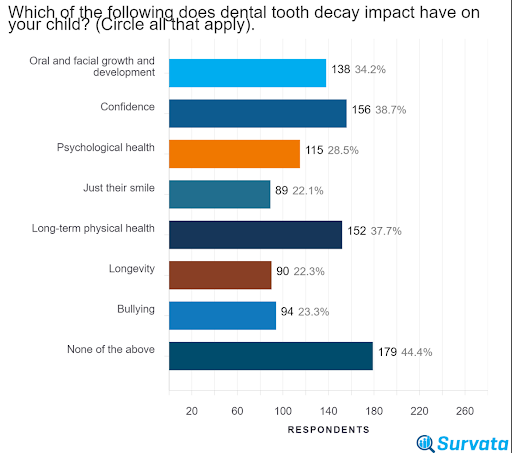
Tooth decay can also cause problems you might not anticipate. When we surveyed parents about how tooth decay impacts their children, they reported a number of different negative effects. As the figure below shows, children with tooth decay struggle with confidence, bullying, and psychological and physical health. These impacts can have a lasting impact on a person’s lifelong health and well-being.
Additionally, if tooth decay continues to progress untreated, you could even lose part or all of your tooth.
How Can a Tooth Infection Make You Sick?
So, why is oral health important beyond keeping your teeth clean? Excellent dental hygiene helps prevent dental problems that could cause many other issues. But, can a rotten tooth make you sick? Can a rotten tooth cause a sore throat? Unfortunately, yes.
When a cavity progresses enough, it’s possible to get a bacterial infection. That infection can become a tooth abscess—a pocket of pus caused by the infection. Depending on where the decay and infection originate, you could end up with an abscess on the root of your tooth or next to the root inside your gums. While a tooth abscess is treatable—your dentist can drain it and clear the infection with medication—you still may end up losing the tooth.
You’re also opening yourself up to an increased risk of infection in other parts of the body or sickness. If you don’t treat your tooth abscess, you can experience serious complications, including:
- Persistent, severe, and throbbing toothache pain that can radiate to your ear, jaw, or neck
- Temperature sensitivity
- Sensitivity and difficulty with biting and chewing
- Ruptured abscess
- Fever
- Swollen and tender lymph nodes
- Swelling in your face
- Difficulty breathing
If you experience fever and swelling in your face with an abscess, see your dentist immediately for emergency treatment or go to the ER. If you experience difficulty breathing or swallowing, go to the ER right away. These are signs that the infection has spread.
What Are Some Health Issues Caused by Rotten Teeth?
There are a variety of health problems caused by bad teeth. Many of these problems are very serious, and some of them can be life-threatening.
Brain or Heart infections
Because infections inside the mouth can spread to other parts of your body, a tooth infection can spread to your jaw or soft tissues. From there, the infection could spread further, even impacting your neurological or cardiovascular health. Bad dental hygiene and heart disease are connected, and though it’s rare, untreated tooth infections can spread to the heart, becoming endocarditis. The infection could also spread to the brain, where it’s called bacterial meningitis. The inflammation that occurs with gum disease and tooth decay is also linked to neurological degeneration and Alzheimers.
Gum disease
Tooth decay and gum disease frequently occur at the same time due to insufficient oral care. Gum disease has a variety of health implications and, when left untreated, can lead to bone loss and tooth loss. Gum disease can also exacerbate or cause other health problems, including arthritis, diabetes, stroke, and heart and lung disease. Bad dental hygiene and heart disease don’t have to be in your future if you take good care of your teeth.
Blood poisoning
As soon as you get any kind of infection, there’s a risk of that infection spreading to your blood. The bacteria from your infection can lead to blood poisoning. Blood poisoning is serious and can cause cold and flu-like symptoms, including chills, fever, and rapid breathing and heart rate. When left untreated, blood poisoning can cause sepsis.
Blood infection called sepsis
Sepsis is a life-threatening infection in your blood that can impact your vital organs, including your kidneys, lungs, and heart. Sepsis is aggressive, and if it’s not treated quickly, it can cause organ failure and death. This is why it’s important to take any infection seriously.
Clearly, there’s often a direct line between bad teeth and health issues. It’s not only important to get treatment for dental problems quickly, but also to maintain great oral health from the start. Otherwise, tooth decay and tooth problems could lead to serious health issues faster than you might expect.
How to Prevent Dental Tooth Decay in Your Child
Now that you’ve read this far, you don’t have to ask, “Can bad teeth make you sick?” It’s clear that bad teeth and health issues are closely connected, so preventing tooth decay is essential. Protecting your children’s teeth and preventing tooth decay helps them avoid dealing with the rotten teeth effects on the body for the rest of their lives. You’ll help your child get a healthier start to their oral health, but also their whole-body health.
It’s important to learn about how different parts of your life affect your teeth and gums. Understanding how stress affects your oral health, for example, can help you combat dental problems that can occur in times of high stress.
However, it’s also essential to learn how your oral health impacts other parts of your life and health. Poor oral health and tooth problems can cause anxiety, depression, and social challenges, as well as physical issues that can seriously impact the rest of your body. All of these problems can be quite serious, but they can also be prevented with excellent oral hygiene and dental care.
To learn more about how to prevent tooth decay in your child or in yourself, and how the actions that help in this endeavor can also help take care of your whole body health, pre-order your copy of If Your Mouth Could Talk today.
See a Pediatric Dentist; Save a Tooth
Dental care and oral hygiene should start as early as possible. So, when should your child see a pediatric dentist? As soon as that first baby tooth erupts, make an appointment for your child’s first dental visit. You’ll be setting them up for a healthier mouth and healthier body for life.
FAQs About Rotten Teeth & Whole Body Health
Can you fix rotting teeth?
Yes. Early-stage tooth decay can often be reversed with improved oral hygiene, fluoride or nanohydroxyapatite, and dietary changes. More advanced decay may require fillings, root canals, or even extraction.
What happens if you don’t remove a rotten tooth?
A rotten tooth can lead to an abscess, spreading infection, and damage to nearby teeth or bone. If untreated, it can result in life-threatening complications like sepsis or brain infections.
How serious is a rotten tooth?
Very serious. It’s not just a dental problem. It’s a health hazard. Rotten teeth can affect your entire body and significantly increase your risk of chronic diseases.
How long does it take for a rotten tooth to fall out?
That depends on the severity of decay. In some cases, it can take months or years. However, waiting for a tooth to fall out naturally is dangerous and can lead to painful infections and systemic health risks.